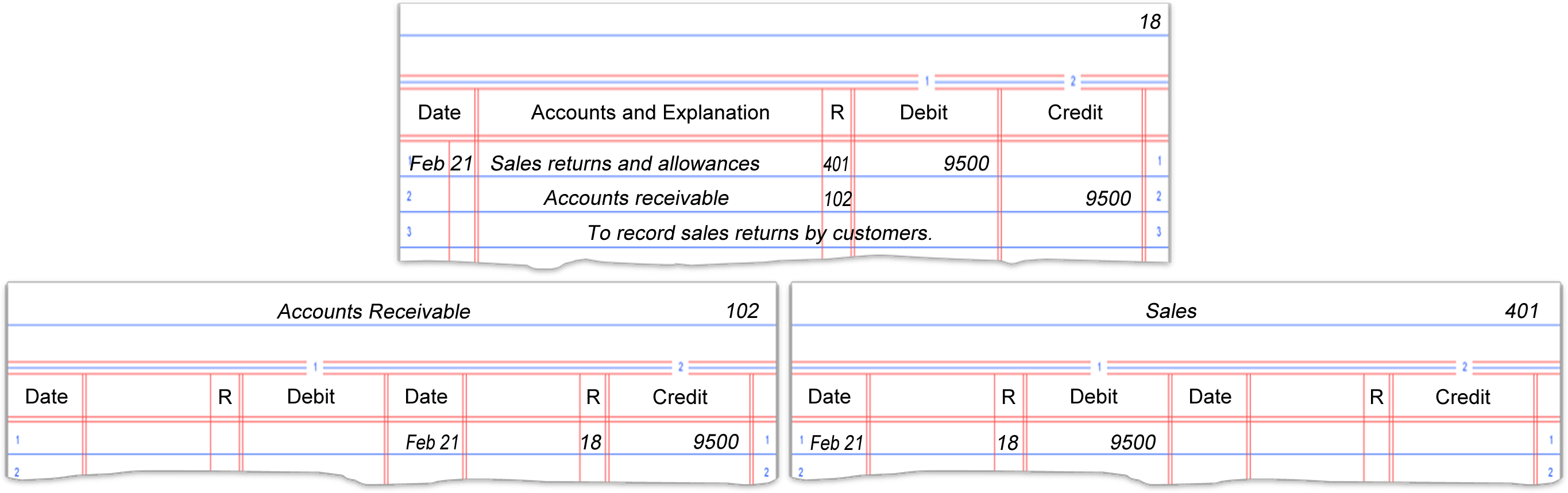
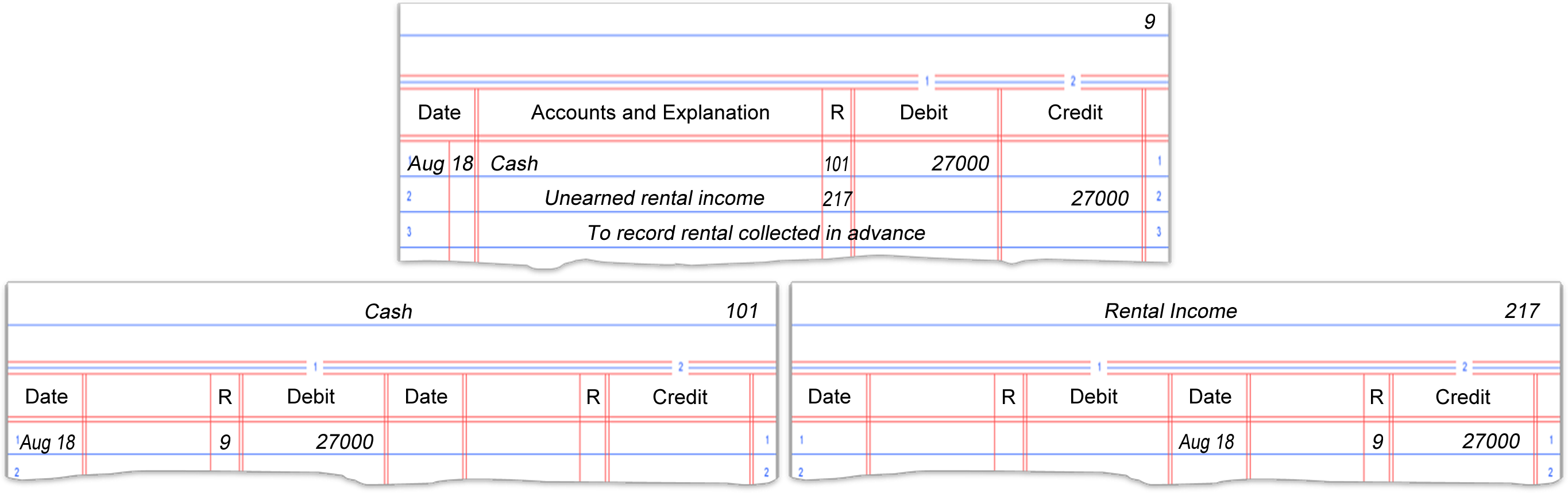
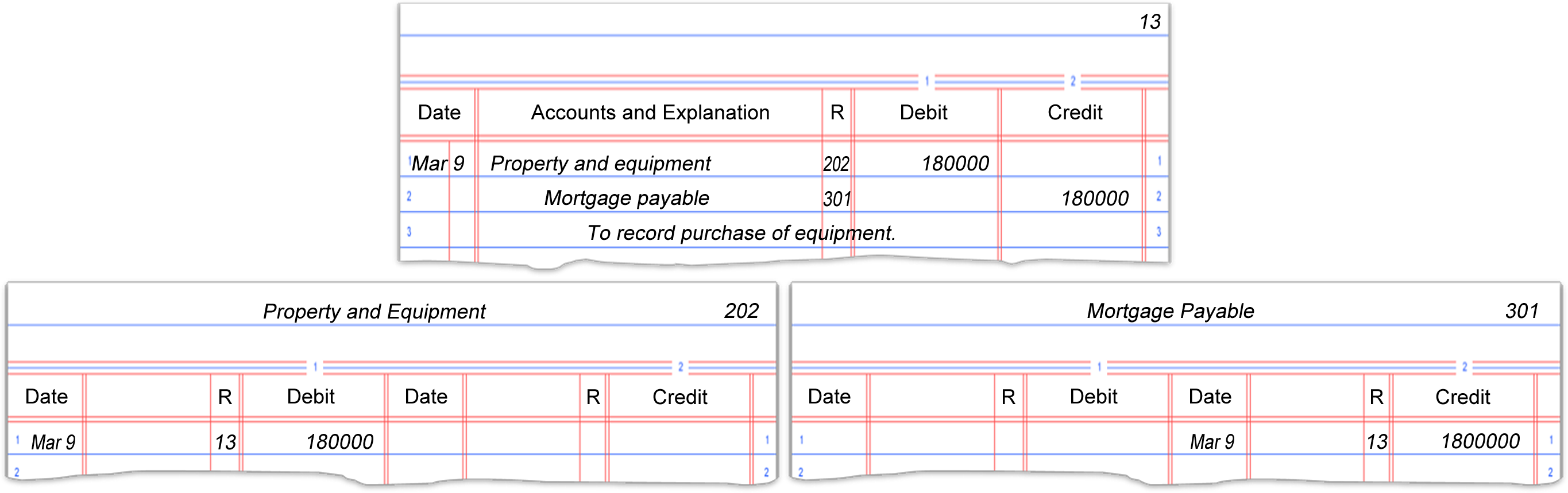
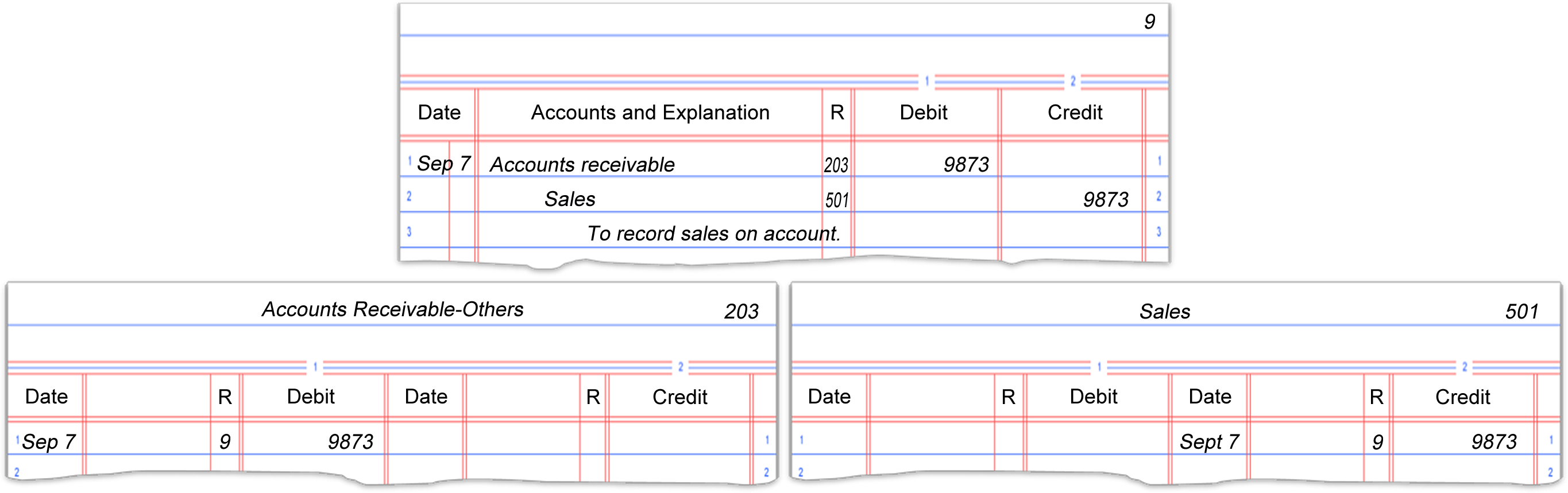
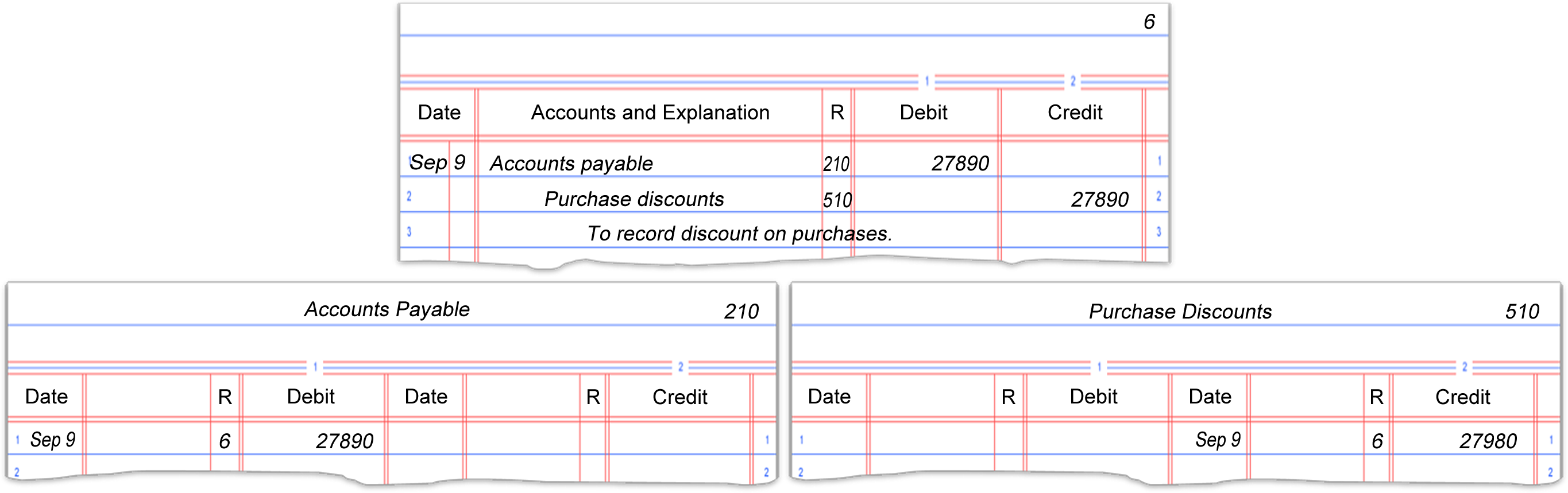
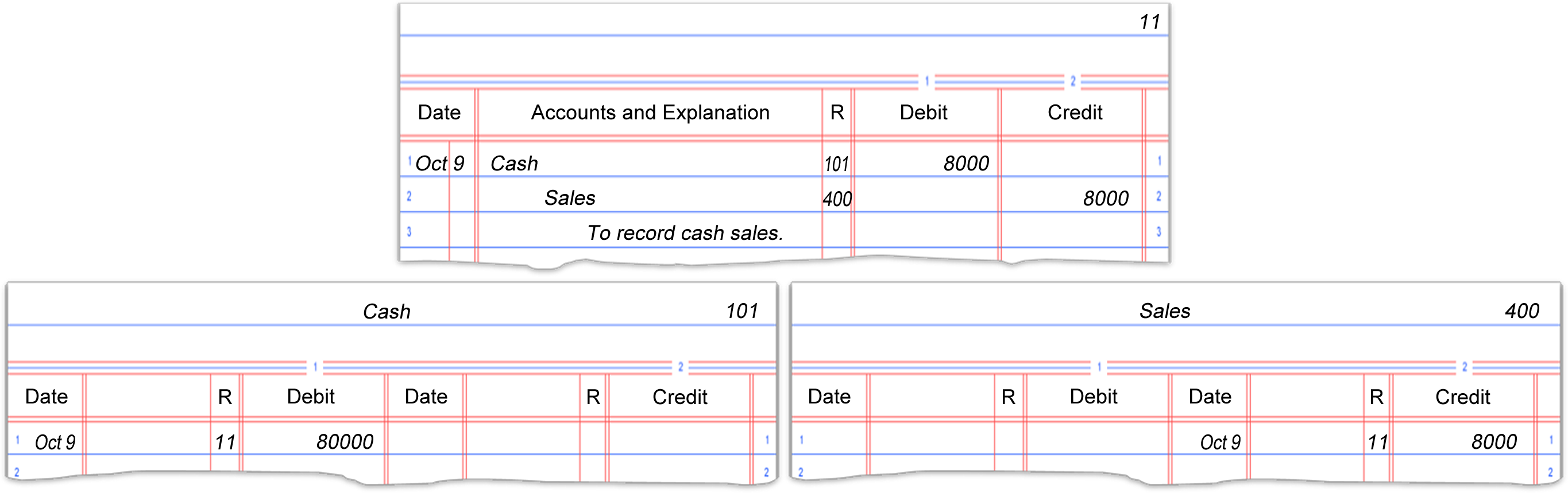
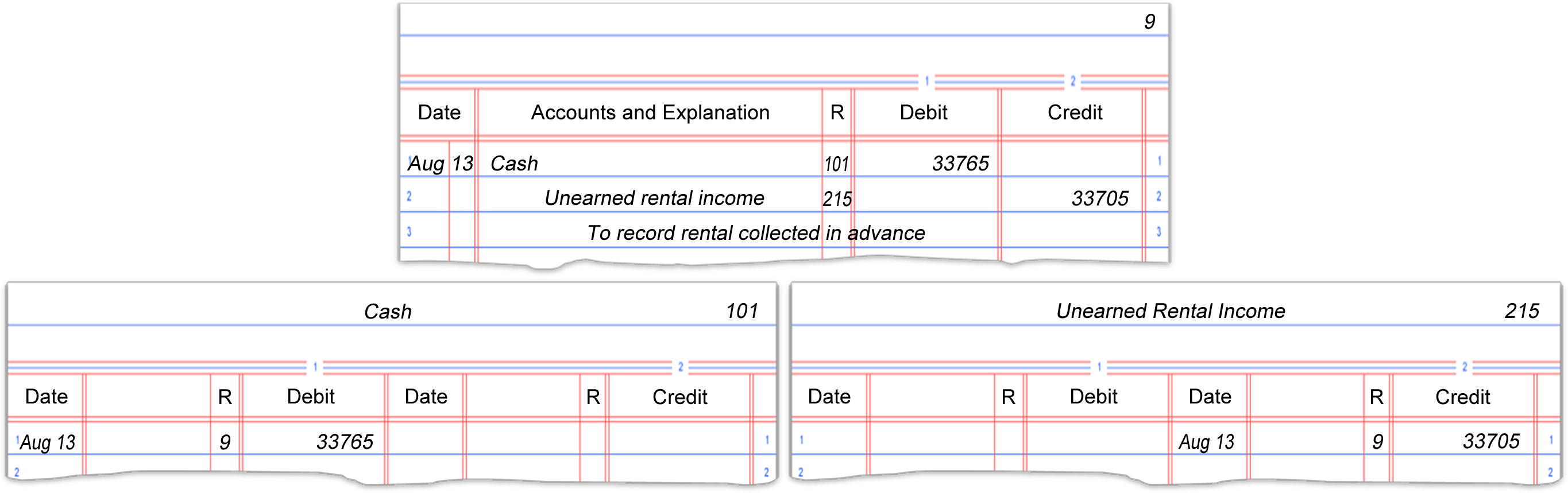
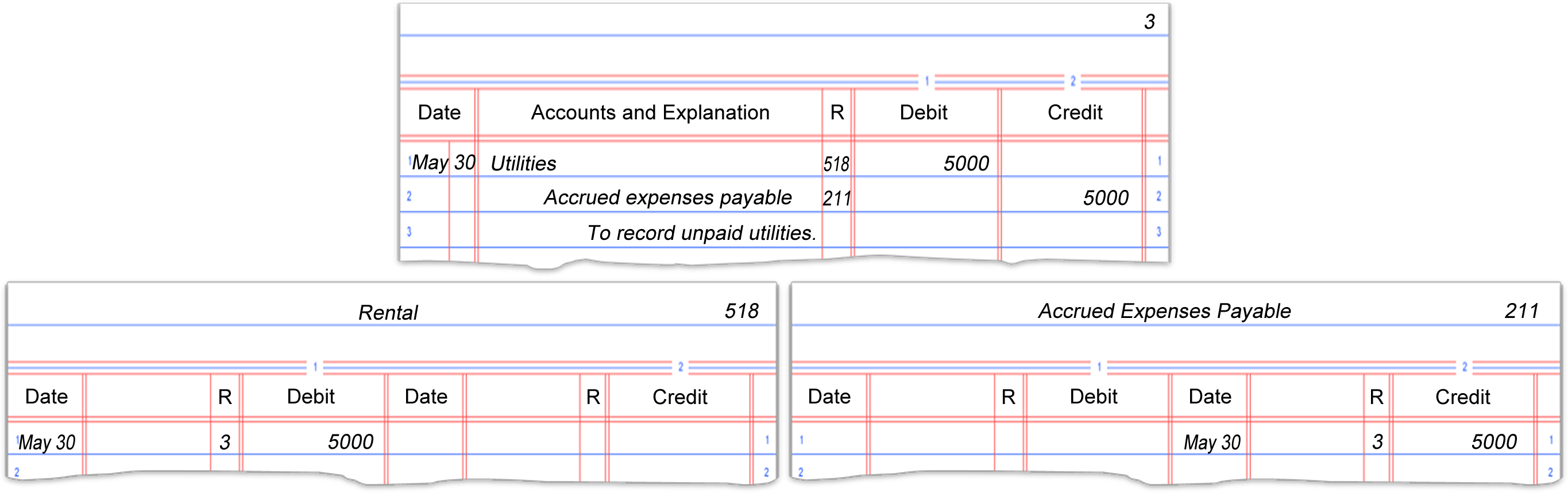
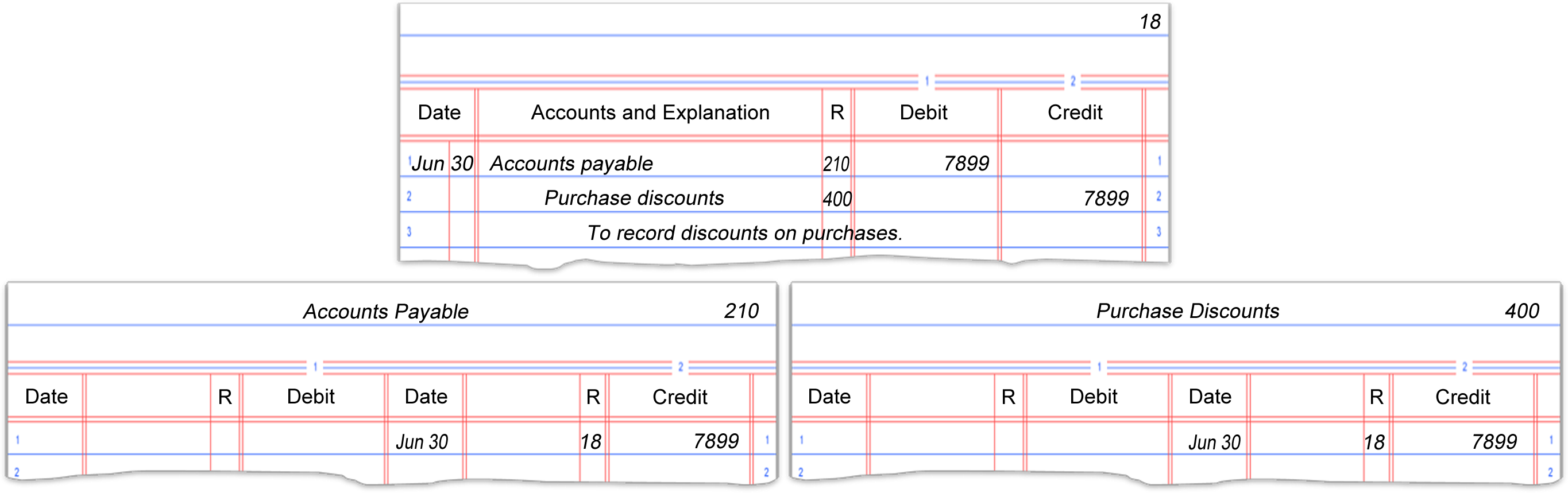
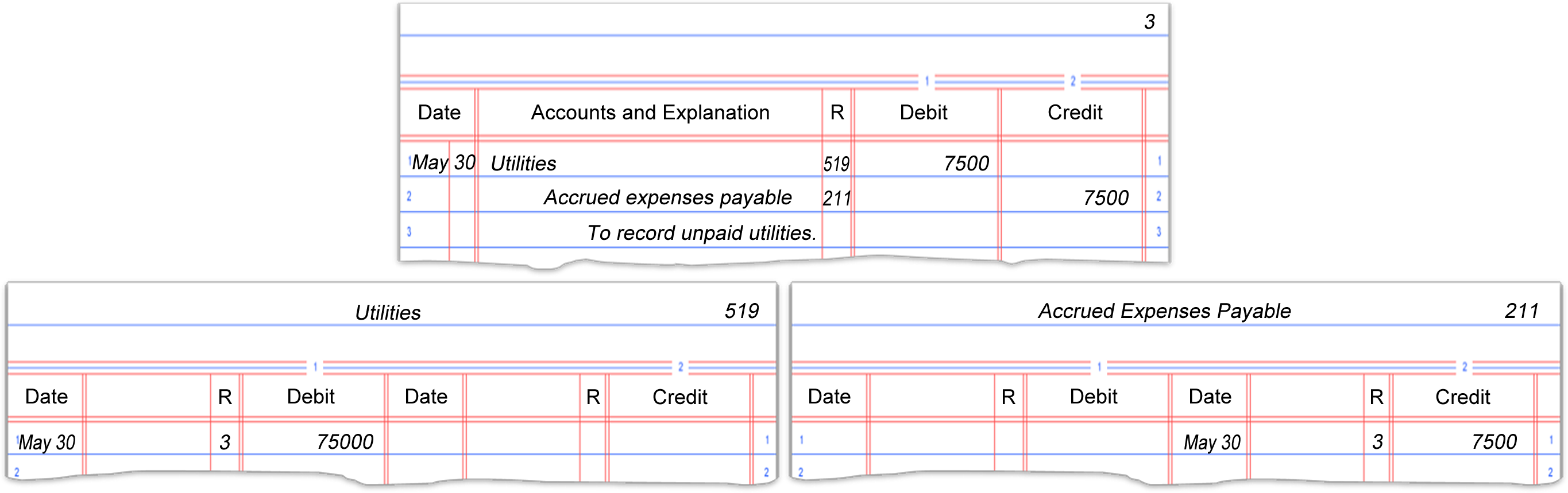
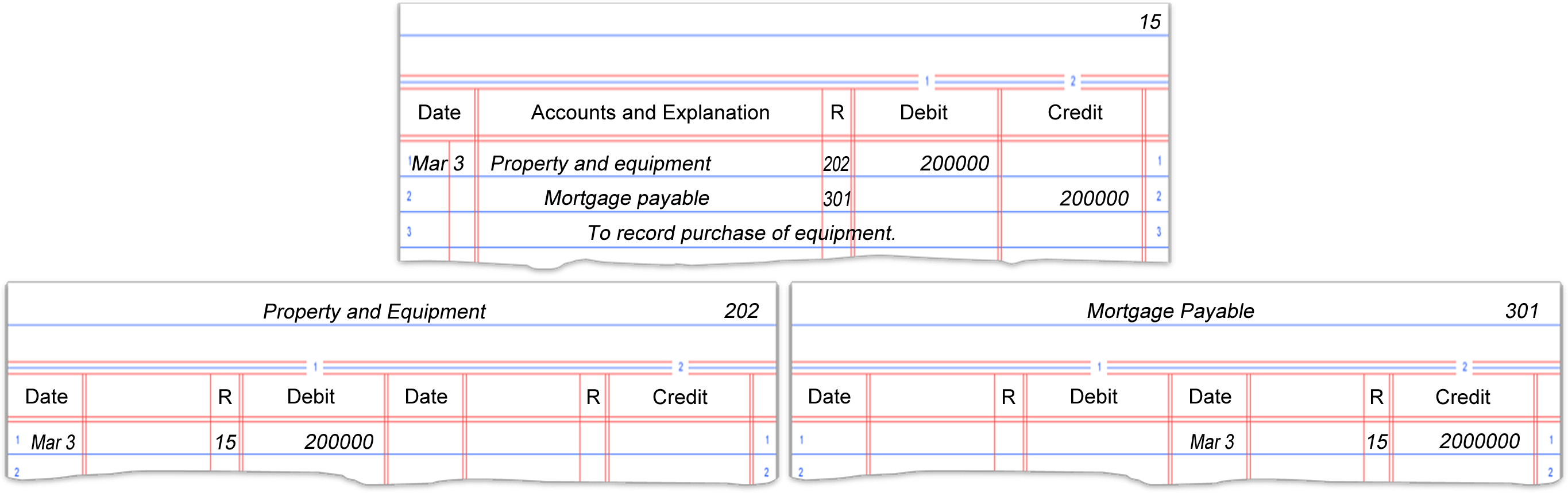
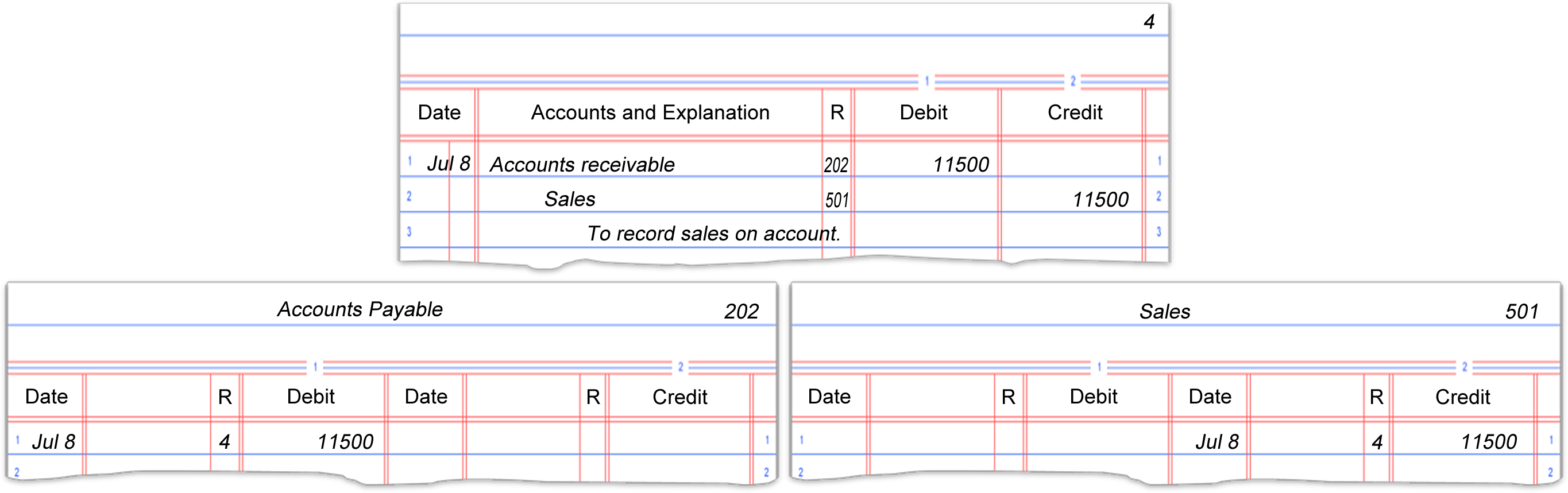
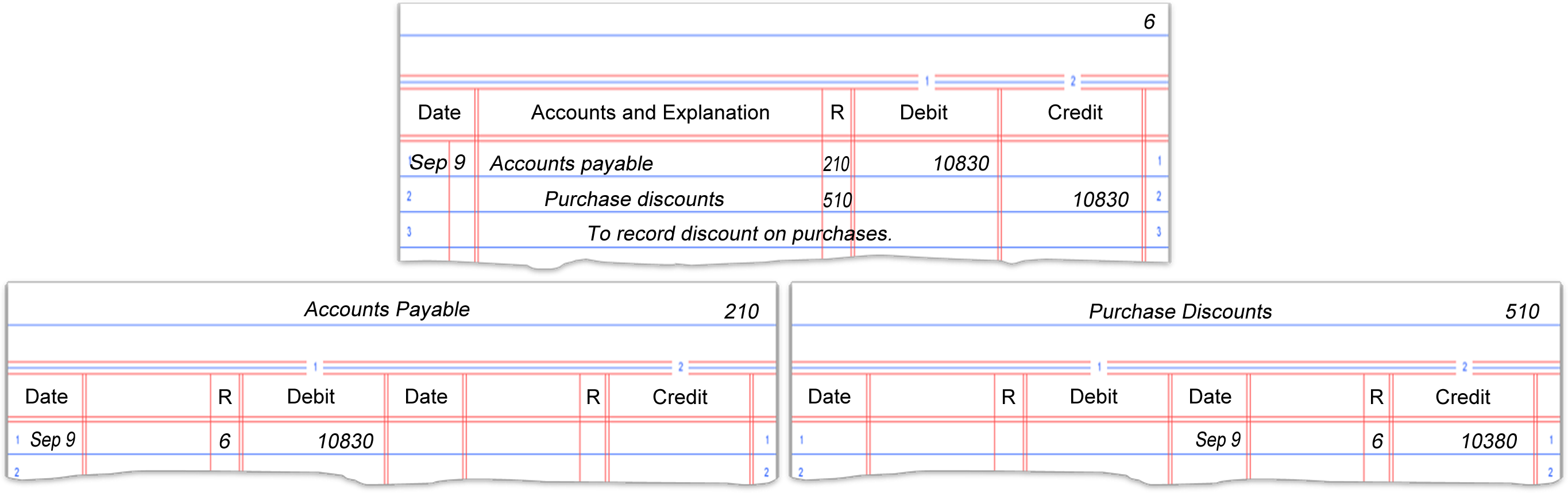
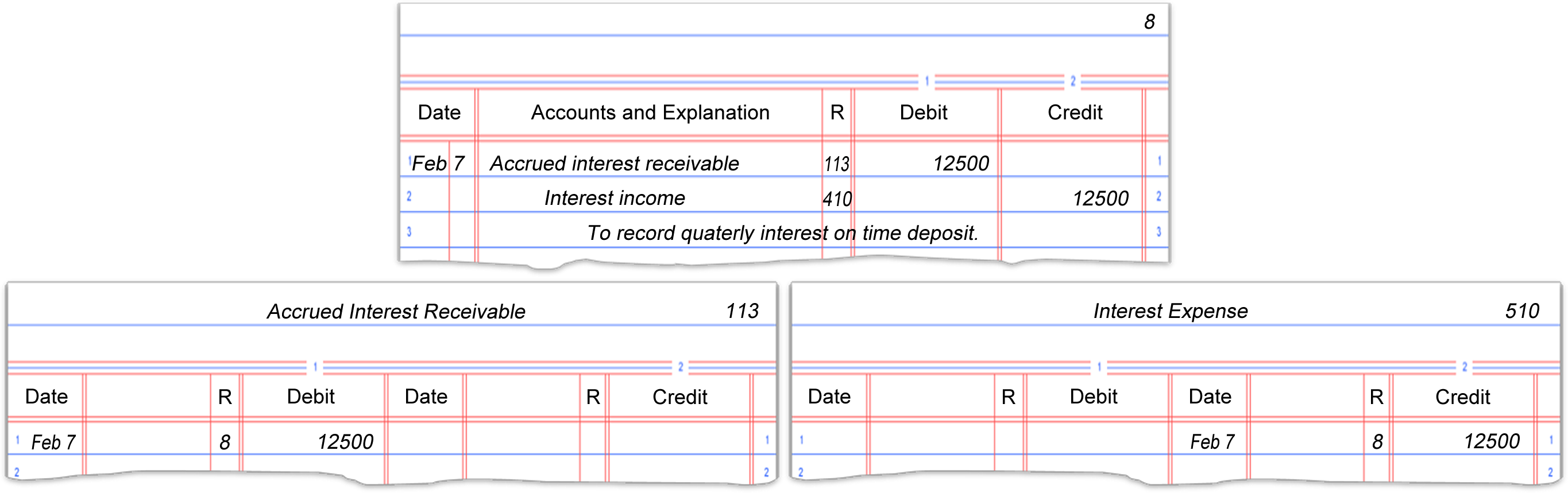
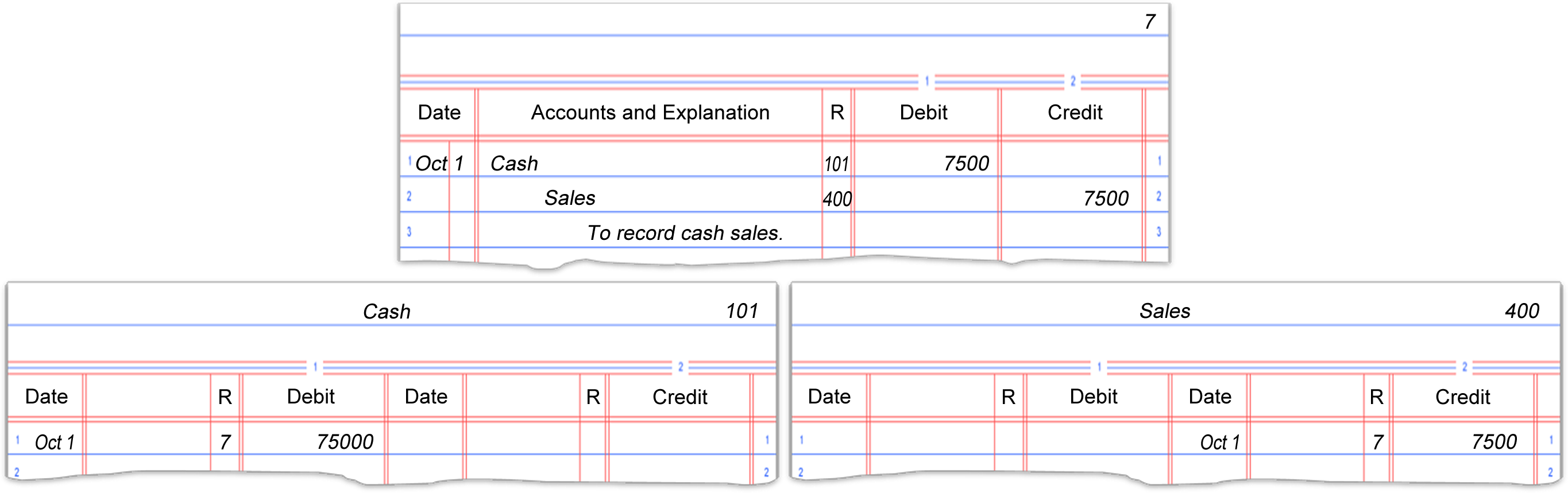
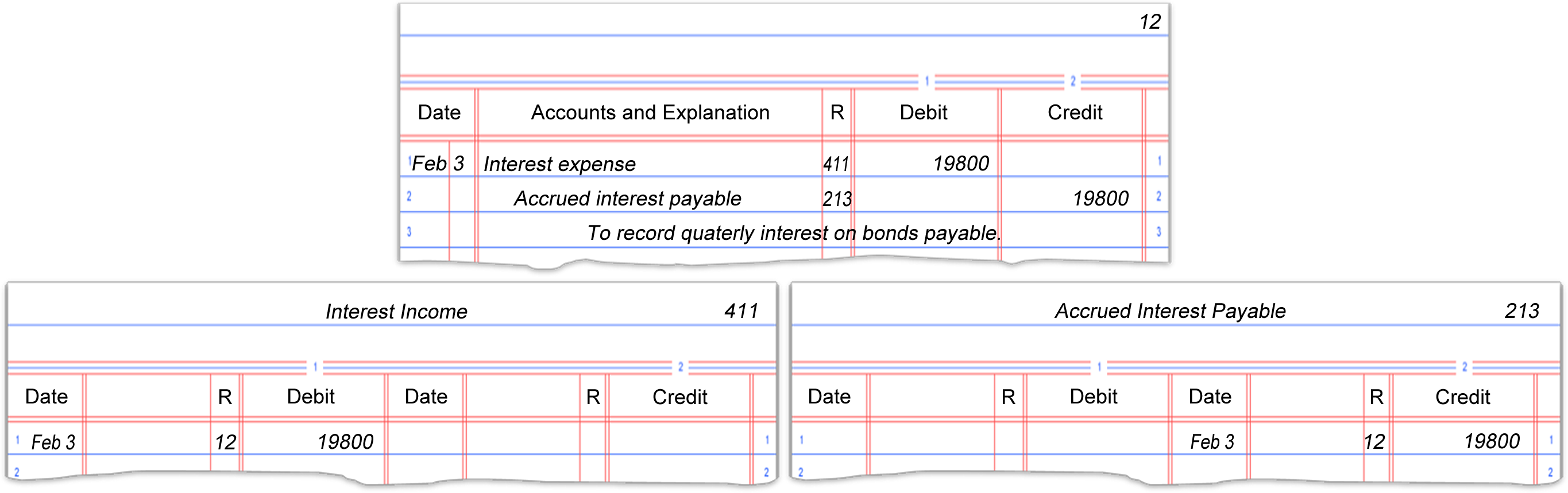
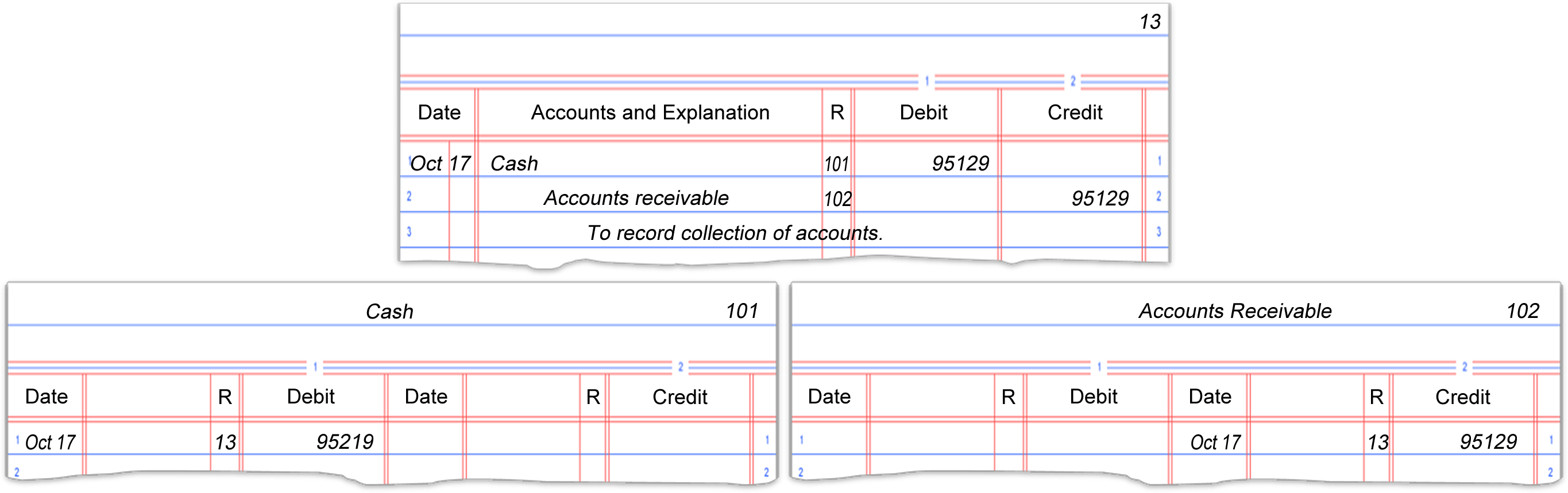
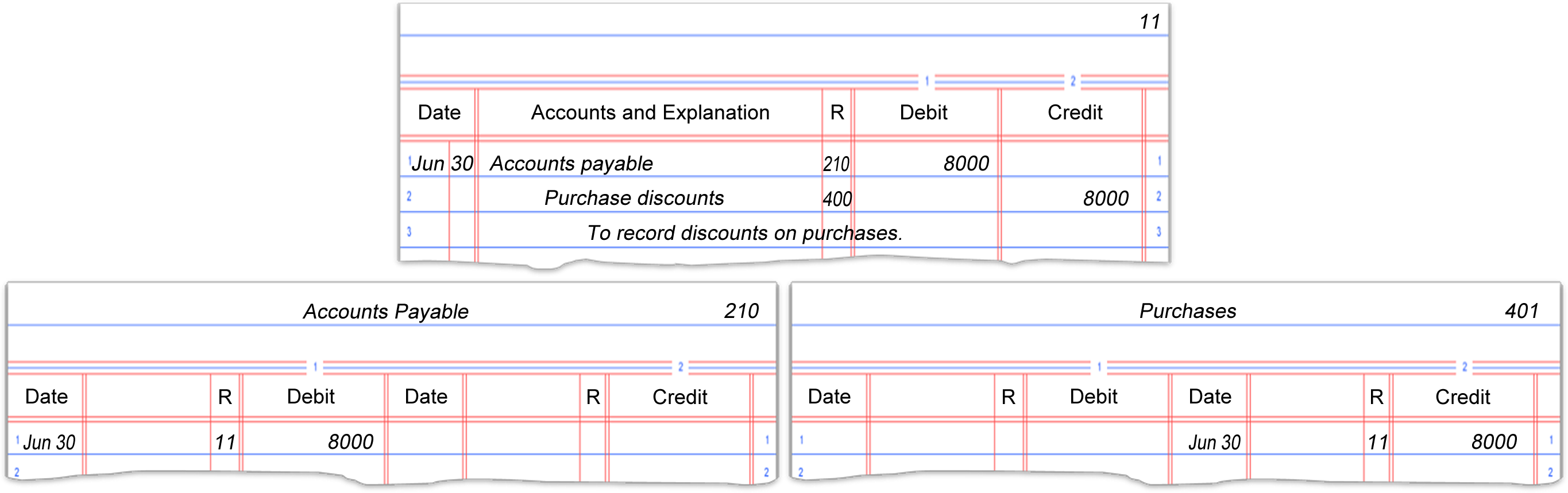
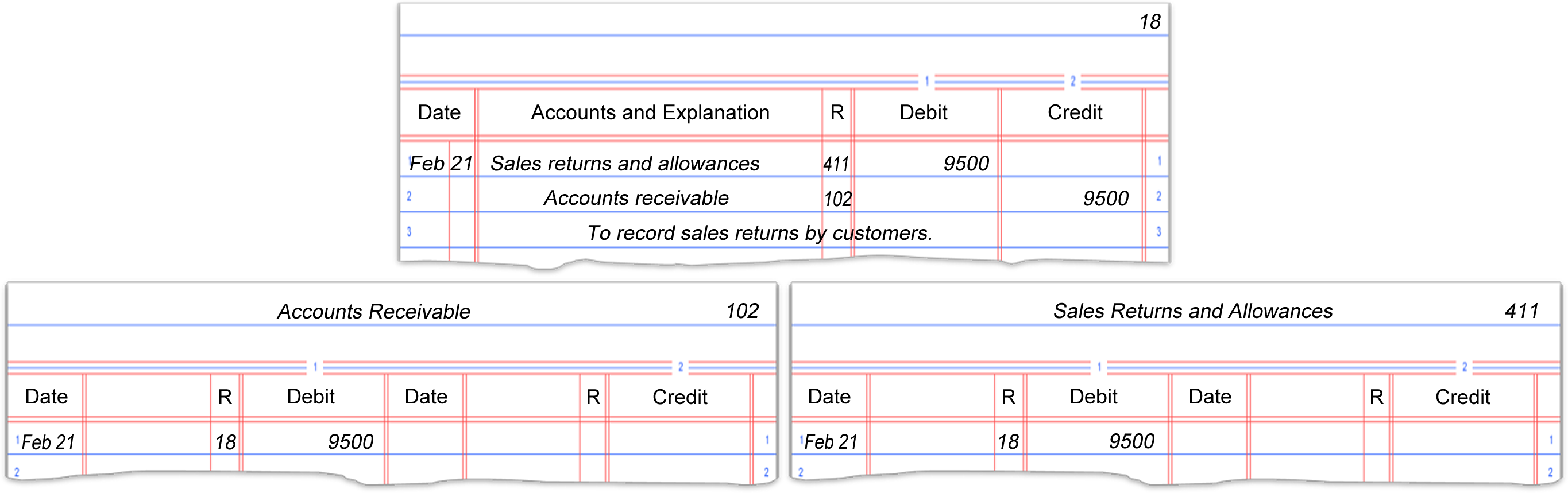
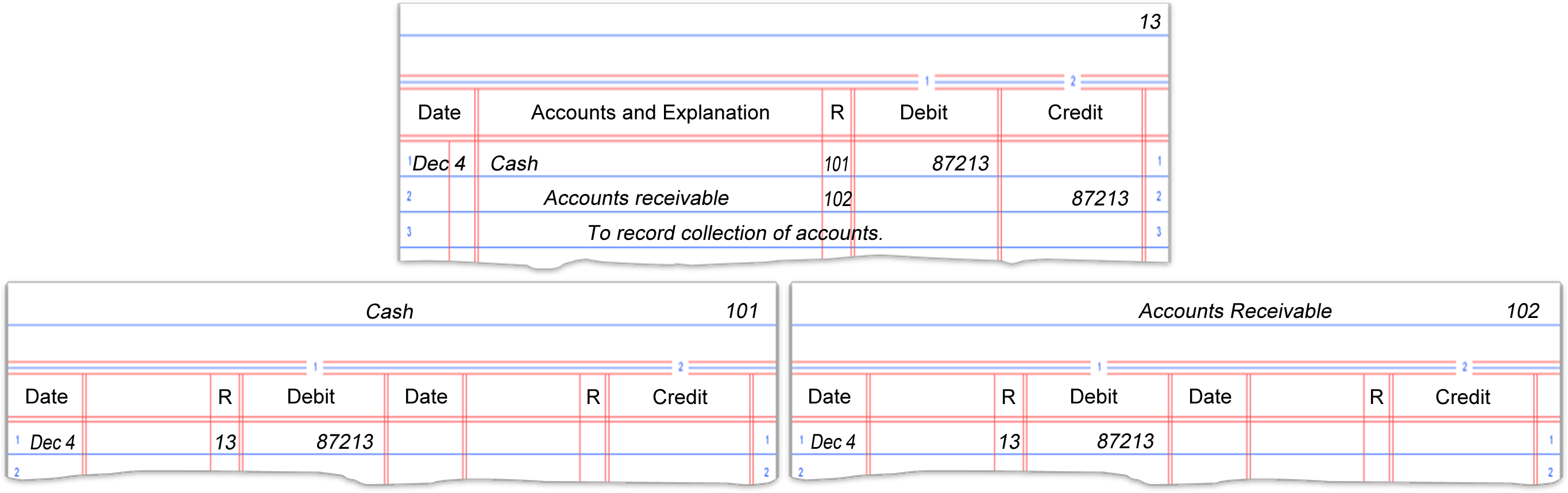
Posting entries from the general journal to the general ledger groups transactions of similar nature into a single account. This effectively summarizes those transactions that lead to the determination of balances at the end of the period. The general ledger is the book of final entry where the initial recording phase ends and summarization begins.
Posting is a mechanical process, not requiring any analysis. Instead care and accuracy is important to ensure that the details of the journal entry is correctly posted to the general ledger, regardless of the entry’s correctness or propriety. Posting does not correct errors but could lead to errors.
In manual accounting systems, two common formats of the general ledger are used, the T-account format, and the 3-column format. Both formats have columns for debits and credits. In the T-column format, the columns are in opposite sides of the page; in the 3-column format, the debit and credit columns are placed side by side followed by a third column for the updated balance.
The posting process is usually done at the end of the accounting period, or as often as necessary and feasible. It involves transferring the amounts from the general journal exactly as it was originally recorded. Debit and credit amounts are posted to the appropriate columns in the general ledger. Other information such as date and reference numbers are also posted to the general ledger.
The balance of the account is the most important detail resulting from the posting process. It is the amount that is reported in the financial statements after any adjustment that may be necessary. The balance of an account is determined by comparing the total debits with the total debits. The difference is the balance of the account and whichever side has the bigger total determines whether the amount is a debit or a credit balance.
KNOWLEDGE CHECK
This is a 30-minute, 20-item quiz and allows five attempts. Score sixteen correct answers (80%) at least once to earn a certificate. You can skip questions for later review but items unanswered upon submission are counted as incorrect. Take the quiz when you are certain of your familiarity with and understanding of the course contents. You may view statistics for the course in your profile page.
Quiz Guide
IMPORTANT POINTERS
Quizzes are time-limited; remaining time is indicated while the quiz is in progress.
Questions can be skipped for later review; however, any question left unanswered upon submission will be marked wrong.
More than one attempt is usually allowed; this is an opportunity to improve scores.
Quiz results, correct answers, and wrong responses to each question are presented the end of the quiz.
Average score of all who took the quiz previously is indicated.
Additional statistics for the quiz are available in the profile page, including time spent on each question.
Before taking the quiz for the second or third time, it is advisable to review the materials for any item that may need further understanding.
Good Luck!
Time limit: 0
Quiz Summary
0 of 35 Questions completed
Questions:
Information
You have already completed the quiz before. Hence you can not start it again.
Fill in correct amount. Do not include decimals, commas and other punctuation marks, and currency signs (e.g., 99999, instead of $99,999.00).
If total debits amounted to $98,600 and total credits amounted to $88,000, the Accounts Receivable account will have a (debit or credit) balance of .
Correct
Incorrect
Question 2 of 35
2. Question
What is the posting error?
Correct
Incorrect
Hint
Trace each item in the journal entry to the ledger. Accounts should be to the correct ledger page, amounts to the correct side, and as recorded in the journal.
Question 3 of 35
3. Question
Fill in correct amount. Do not include decimals, commas and other punctuation marks, and currency signs (e.g., 99999, instead of $99,999.00).
If total credits amounted to $76,300 and total debits amounted to $61,200, the Accounts Payable account will have a (debit or credit) balance of .
Correct
Incorrect
Question 4 of 35
4. Question
What is the posting error?
Correct
Incorrect
Hint
Trace each item in the journal entry to the ledger. Accounts should be to the correct ledger page, amounts to the correct side, and as recorded in the journal.
Question 5 of 35
5. Question
Fill in correct amount. Do not include decimals, commas and other punctuation marks, and currency signs (e.g., 99999, instead of $99,999.00).
Ifthe Prepaid Expenses account has a debit balance of $24,000,and total debits amounted to $96,000, the sum of credits is.
Correct
Incorrect
Question 6 of 35
6. Question
What is the posting error?
Correct
Incorrect
Hint
Trace each item in the journal entry to the ledger. Accounts should be to the correct ledger page, amounts to the correct side, and as recorded in the journal.
Question 7 of 35
7. Question
What is the posting error?
Correct
Incorrect
Hint
Trace each item in the journal entry to the ledger. Accounts should be to the correct ledger page, amounts to the correct side, and as recorded in the journal.
Question 8 of 35
8. Question
Fill in correct amount. Do not include decimals, commas and other punctuation marks, and currency signs (e.g., 99999, instead of $99,999.00).
Ifthe Mortgage Payable account has a credit balance of $3,500,000,and total debits amounted to $500,000, the sum of credits is.
Correct
Incorrect
Question 9 of 35
9. Question
Fill in correct amount. Do not include decimals, commas and other punctuation marks, and currency signs (e.g., 99999, instead of $99,999.00).
Ifthe Accounts Payable account has a credit balance of $1,680,000and total credits amounted to $2,000,000, the sum of debits is.
Correct
Incorrect
Question 10 of 35
10. Question
What is the posting error?
Correct
Incorrect
Hint
Trace each item in the journal entry to the ledger. Accounts should be to the correct ledger page, amounts to the correct side, and as recorded in the journal.
Question 11 of 35
11. Question
Fill in correct amount. Do not include decimals, commas and other punctuation marks, and currency signs (e.g., 99999, instead of $99,999.00).
Ifthe Loan Payable account has a credit balance of $1,500,000,and total debits amounted to $500,000, the sum of credits is.
Correct
Incorrect
Question 12 of 35
12. Question
What is the posting error?
Correct
Incorrect
Hint
Trace each item in the journal entry to the ledger. Accounts should be to the correct ledger page, amounts to the correct side, and as recorded in the journal.
Question 13 of 35
13. Question
What is the posting error?
Correct
Incorrect
Question 14 of 35
14. Question
What is the posting error?
Correct
Incorrect
Hint
Trace each item in the journal entry to the ledger. Accounts should be to the correct ledger page, amounts to the correct side, and as recorded in the journal.
Question 15 of 35
15. Question
Match the following
Sort elements
General ledger 3-column format
General ledger T-account format
Correct
Incorrect
Question 16 of 35
16. Question
What is the posting error?
Correct
Incorrect
Hint
Trace each item in the journal entry to the ledger. Accounts should be to the correct ledger page, amounts to the correct side, and as recorded in the journal.
Question 17 of 35
17. Question
What is the posting error?
Correct
Incorrect
Hint
Trace each item in the journal entry to the ledger. Accounts should be to the correct ledger page, amounts to the correct side, and as recorded in the journal.
Question 18 of 35
18. Question
What is the posting error?
Correct
Incorrect
Hint
Trace each item in the journal entry to the ledger. Accounts should be to the correct ledger page, amounts to the correct side, and as recorded in the journal.
Question 19 of 35
19. Question
What is the posting error?
Correct
Incorrect
Hint
Trace each item in the journal entry to the ledger. Accounts should be to the correct ledger page, amounts to the correct side, and as recorded in the journal.
Question 20 of 35
20. Question
Fill in correct amount. Do not include decimals, commas and other punctuation marks, and currency signs (e.g., 99999, instead of $99,999.00).
If total credits amounted to $25,866 and total debits amounted to $14,755, the Accrued Expenses Payable account will have a (debit or credit) balance of .
Correct
Incorrect
Question 21 of 35
21. Question
What is the posting error?
Correct
Incorrect
Hint
Trace each item in the journal entry to the ledger. Accounts should be to the correct ledger page, amounts to the correct side, and as recorded in the journal.
Question 22 of 35
22. Question
Fill in correct amount. Do not include decimals, commas and other punctuation marks, and currency signs (e.g., 99999, instead of $99,999.00).
If the Property and Equipment account has a balance of $1,077,000, and total credits amounted to $103,000, the sum of debits is .
Correct
Incorrect
Question 23 of 35
23. Question
What is the posting error?
Correct
Incorrect
Hint
Trace each item in the journal entry to the ledger. Accounts should be to the correct ledger page, amounts to the correct side, and as recorded in the journal.
Question 24 of 35
24. Question
What is the posting error?
Correct
Incorrect
Hint
Trace each item in the journal entry to the ledger. Accounts should be to the correct ledger page, amounts to the correct side, and as recorded in the journal.
Question 25 of 35
25. Question
Fill in correct amount. Do not include decimals, commas and other punctuation marks, and currency signs (e.g., 99999, instead of $99,999.00).
Ifthe Accounts Receivable account has a debit balance of$35,450,and totalcredits amounted to $110,550, the sum of debits is.
Correct
Incorrect
Question 26 of 35
26. Question
What is the posting error?
Correct
Incorrect
Hint
Trace each item in the journal entry to the ledger. Accounts should be to the correct ledger page, amounts to the correct side, and as recorded in the journal.
Question 27 of 35
27. Question
What is the posting error?
Correct
Incorrect
Hint
Trace each item in the journal entry to the ledger. Accounts should be to the correct ledger page, amounts to the correct side, and as recorded in the journal.
Question 28 of 35
28. Question
Fill in correct amount. Do not include decimals, commas and other punctuation marks, and currency signs (e.g., 99999, instead of $99,999.00).
Ifthe Investments account has a debit balance of $2,850,000and total debits amounted to $5,000,000, the sum of credits is.
Correct
Incorrect
Question 29 of 35
29. Question
Fill in the blank
The general ledger is also called the book of .
Correct
Incorrect
Question 30 of 35
30. Question
What is the posting error?
Correct
Incorrect
Hint
Trace each item in the journal entry to the ledger. Accounts should be to the correct ledger page, amounts to the correct side, and as recorded in the journal.
Question 31 of 35
31. Question
Which of the following statements are correct?
Correct
Incorrect
Question 32 of 35
32. Question
Fill in the blank
Because of its “T” format, with a left side and right side, a general ledger account resembles the .
Correct
Incorrect
Question 33 of 35
33. Question
What is the posting error?
Correct
Incorrect
Hint
Trace each item in the journal entry to the ledger. Accounts should be to the correct ledger page, amounts to the correct side, and as recorded in the journal.
Question 34 of 35
34. Question
Fill in correct amount. Do not include decimals, commas and other punctuation marks, and currency signs (e.g., 99999, instead of $99,999.00)
If total debits amounted to $104,500 and total credits amounted to $87,000, the Cash account will have a (debit or credit) balance of .
Correct
Incorrect
Question 35 of 35
35. Question
What is the posting error?
Correct
Incorrect
Hint
Trace each item in the journal entry to the ledger. Accounts should be to the correct ledger page, amounts to the correct side, and as recorded in the journal.
We use cookies on our website to give you the most relevant experience by remembering your preferences and repeat visits. By clicking “Accept All”, you consent to the use of ALL the cookies. However, you may visit "Cookie Settings" to provide a controlled consent.
This website uses cookies to improve your experience while you navigate through the website. Out of these, the cookies that are categorized as necessary are stored on your browser as they are essential for the working of basic functionalities of the website. We also use third-party cookies that help us analyze and understand how you use this website. These cookies will be stored in your browser only with your consent. You also have the option to opt-out of these cookies. But opting out of some of these cookies may affect your browsing experience.
Necessary cookies are absolutely essential for the website to function properly. These cookies ensure basic functionalities and security features of the website, anonymously.
Cookie
Duration
Description
cookielawinfo-checkbox-analytics
11 months
This cookie is set by GDPR Cookie Consent plugin. The cookie is used to store the user consent for the cookies in the category "Analytics".
cookielawinfo-checkbox-functional
11 months
The cookie is set by GDPR cookie consent to record the user consent for the cookies in the category "Functional".
cookielawinfo-checkbox-necessary
11 months
This cookie is set by GDPR Cookie Consent plugin. The cookies is used to store the user consent for the cookies in the category "Necessary".
cookielawinfo-checkbox-others
11 months
This cookie is set by GDPR Cookie Consent plugin. The cookie is used to store the user consent for the cookies in the category "Other.
cookielawinfo-checkbox-performance
11 months
This cookie is set by GDPR Cookie Consent plugin. The cookie is used to store the user consent for the cookies in the category "Performance".
viewed_cookie_policy
11 months
The cookie is set by the GDPR Cookie Consent plugin and is used to store whether or not user has consented to the use of cookies. It does not store any personal data.
Functional cookies help to perform certain functionalities like sharing the content of the website on social media platforms, collect feedbacks, and other third-party features.
Performance cookies are used to understand and analyze the key performance indexes of the website which helps in delivering a better user experience for the visitors.
Analytical cookies are used to understand how visitors interact with the website. These cookies help provide information on metrics the number of visitors, bounce rate, traffic source, etc.
Advertisement cookies are used to provide visitors with relevant ads and marketing campaigns. These cookies track visitors across websites and collect information to provide customized ads.